Ping Pong Fury
- 4.6
- Rating
- 10.00M
- Installs
- Free
- Price

 Analysis by App-foxy
I usually judge a mobile sports game by one simple question: does it make me want to play another match after the first one? Ping Pong Fury passed that test for me because it turns table tennis into quick online contests that are easy to start but surprisingly demanding to master. It is free to download, made by Yakuto, and sits in the sports category rather than trying to be a broad collection of unrelated mini-games.
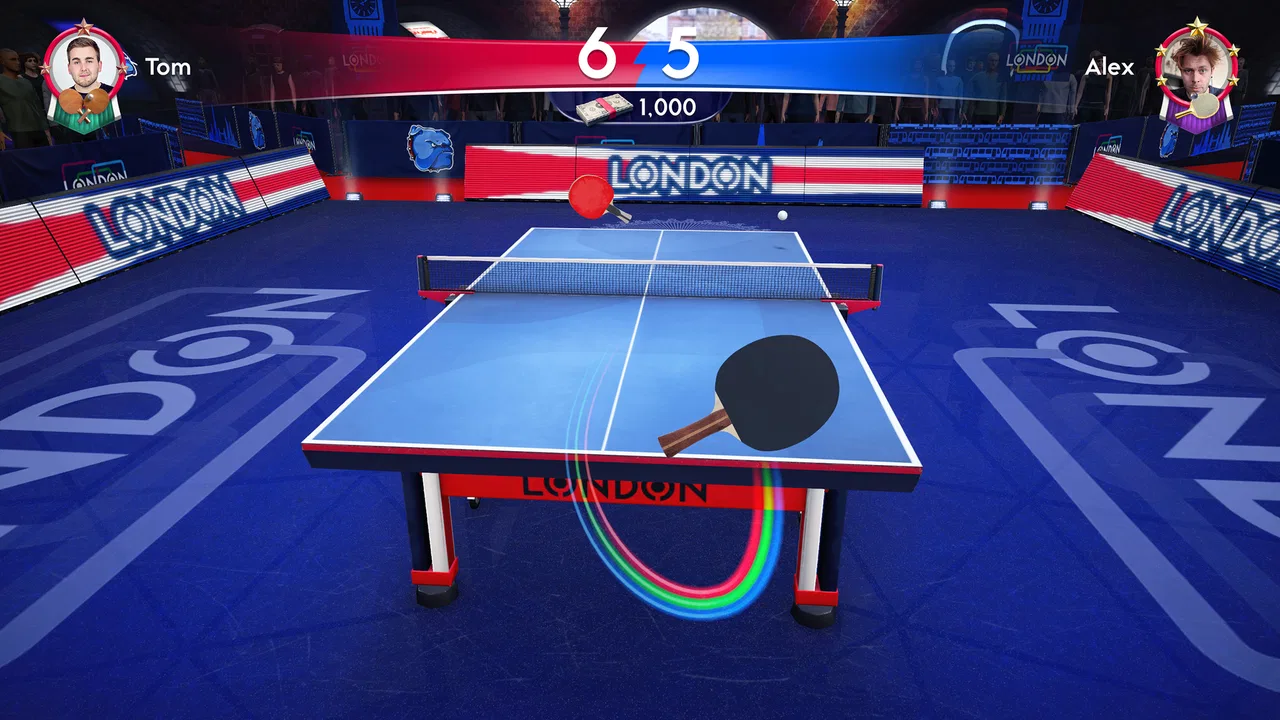
The appeal is immediate. You hold your phone, watch the incoming ball, and swipe to return it. That sounds basic, but the result depends on timing, placement, and how calmly you react when a rally speeds up. I found it much closer to a focused competitive game than to a casual table-tennis toy. It works well for short sessions, yet it also has enough tension to make a loss feel like something I could correct next time.
The game has built a substantial audience, with an average rating of 4.6 from around 209 thousand ratings and more than 10 million installs. Those figures do not guarantee that every player will enjoy the format, but they do suggest that the central idea has connected with a wide range of mobile players. The content rating is Everyone, so it is also a relatively approachable choice for households looking for a sports game without an older age label.
You May Also Like

 Google Keep - Notes and lists
Google Keep’s Quiet Growth Shows the Appeal of Simpler Notes
As mobile work gets busier, Google Keep keeps winning a simple contest: capture a thought quickly, find it later, and get on with the day.

 Blood Strike: 2.5 Anniversary
Blood Strike’s Loadouts Turn Every Drop Into a Tactical Gamble
A close look at Blood Strike’s custom loadouts: how fast access to signature weapons reshapes its battle royale rhythm, rewards preparation, and narrows the gap between fights.

 Pandora - Music & Podcasts
Pandora’s Music Is Easy to Start, but Harder to Recover
Pandora’s strength is its low-effort path from a seed to a station. Its weak spot is how much confidence it asks you to place in connection, setup, and quiet recovery.

 8 Ball Pool
 Is Built on Rivalries, Rematches, and Routine
A close look at the rivalries, rematches, shared routines, and unanswered safety questions that turn a quick pool match into a persistent mobile community.

 Samsung Music
’s Quiet Strength Is Playing What You Already Own
Its reach comes less from spectacle than from dependable access to a personal library. That simplicity is both the app’s strongest retention engine and its ceiling.

 AccuWeather: Weather Radar
AccuWeather Review: A Quick, Clear Forecast for Everyday Decisions
For everyday plans, the best forecast is the one you can understand quickly. AccuWeather makes rain timing, radar, and local conditions easy to act on, with a few trade-offs.
More From Our News Desk



What to consider before choosing it
I’d weigh the match format against the way you actually like to play: this is a focused online table-tennis game, not a substitute for offline practice or a broader sports campaign. I’d also decide beforehand how much competitive play and optional spending suit your routine, so the first burst of novelty doesn’t set expectations the game can’t meet.
The real decision is about match style
Before installing it, I would decide what kind of sports experience I want. If I am looking for a realistic career simulation, detailed team management, or a local multiplayer game to pass around with friends, this is not automatically the best fit. Its focus is much narrower: online table-tennis matches built around direct reactions and repeated competition.
That narrow focus is one of its strengths. I do not have to learn a large roster, manage a club, or spend time navigating a complicated sports universe before playing. The action is centered on returning the ball and trying to control the exchange. For me, that makes it easier to pick up during a spare moment than a full football, basketball, or motorsport game.
The trade-off is that the same structure can become repetitive if I want constant variety. A player who needs a new mode every few minutes may find the loop too concentrated. I enjoyed the repetition because each match gave me another chance to improve a small part of my play, but that mindset matters. This is better for someone who likes refining a skill than for someone who treats every mobile game as a rotating set of activities.
Why the first few matches can be misleading
My first impression was that the controls were almost too simple. Swiping toward the ball produces a return, and the basic interaction is understandable without a long tutorial. However, simplicity does not mean that every swipe has the same result. The direction, timing, and quality of the return affect how safe or dangerous the next exchange feels.
That creates a useful learning curve. At the beginning, I tended to react late and send the ball back without much thought. After a few matches, I started watching the opponent’s position and choosing safer returns instead of swiping wildly. The important shift was realizing that winning is not only about moving quickly. It is also about avoiding rushed decisions that leave the next shot easy to answer.
A practical tip is to spend early sessions concentrating on consistency rather than spectacular attacks. Trying to hit every ball aggressively made my mistakes more frequent. Keeping the rally under control helped me notice where my timing was poor. This is one of the less obvious strengths of the game: it rewards deliberate improvement even though each match looks fast and uncomplicated.
How it fits into an ordinary day
I can see this working well during a short break, while waiting for an appointment, or after finishing a task when I want something interactive but not a large commitment. A match can provide a clear beginning and end, which is more satisfying than opening a game that requires a long session before anything meaningful happens.
There is also a useful emotional difference between playing one match and starting an endless feed of content. A close rally gives me a specific reason to stay engaged, while a quick defeat gives me a clear lesson to think about. That makes it easy to return later with a small goal, such as improving my timing or avoiding the same weak response.
On the other hand, online competition is not ideal when I need a completely quiet or interruption-proof activity. A connection-dependent match is less forgiving than an offline puzzle or a solo sports challenge. If I am about to lose reception, enter a meeting, or play somewhere I cannot concentrate, I would choose a different type of game rather than risk starting a match at the wrong time.
Where the game is strongest
The best part of Ping Pong Fury is the way it turns a familiar sport into a direct test of attention. Table tennis already has a clear physical rhythm, and the touchscreen controls translate that rhythm into something understandable. I never needed to memorize a complicated button layout before I could attempt a return.
I also like that the game creates pressure without requiring a long explanation. A ball coming back quickly gives me an immediate decision: react, place the return, and prepare for the next shot. That makes the experience feel more personal than simply tapping through a menu or waiting for an automated result.
The strongest reason to choose it is the combination of instant controls and a skill-based online match. It is accessible enough for a newcomer to understand, but not so passive that the outcome feels predetermined. When I lost after making several rushed returns, I could usually identify a behavior to change rather than blaming a confusing interface.
Small habits that improve the experience
I found three habits especially useful. First, I stopped treating every incoming ball as an invitation to attack. A controlled return often kept me in the rally longer and gave me more information about the opponent’s rhythm. Second, I paid attention to positioning instead of staring only at the ball. The opponent’s location helped me decide where a return might be more awkward for them.
Third, I used losses as short reviews rather than immediately starting another match in frustration. If my timing was consistently late, playing again without changing anything rarely helped. Taking a moment to identify whether I was rushing, guessing, or swiping too far made the next match more purposeful.
These are not complicated advanced techniques, but they are easy to miss because the controls look so casual. The game does not need to overwhelm new players with technical language to provide depth. The depth comes from how a simple gesture behaves under pressure.
Where other sports games may fit better
The usual alternatives in mobile sports fall into different groups. Some focus on management, where the satisfaction comes from building a team or making long-term decisions. Others emphasize simulation, with more detailed controls and a closer imitation of a full match. There are also arcade sports games that favor exaggerated actions, quick rewards, and constant visual variety.
Ping Pong Fury makes a different choice. It gives table tennis the spotlight and asks me to improve through direct play. If I want to feel responsible for each exchange, this approach is more satisfying than watching a simulated result. If I prefer planning lineups, collecting athletes, or managing a season, a management-focused alternative would probably serve me better.
It is also less suitable for someone who wants a purely offline experience. A solo puzzle or an offline sports game may be the wiser choice for travel, unreliable reception, or relaxed play without competitive pressure. Likewise, a local multiplayer title may be better for a group sitting together, because the appeal here is built around online matches rather than a shared phone in the same room.
That comparison is important because the game should not be judged as though it were trying to replace every kind of sports title. Its value comes from being specific. I would select it for quick competitive table tennis, not for a complete sports-management package.
Free entry and the cost of continuing
The game is free, which makes trying it straightforward. I could see whether the control style suited me before committing money. There are in-app purchases ranging from $0.99 to $99.99 per item, so the free starting point should not be confused with a completely cost-free long-term experience.
For me, the sensible approach is to play enough matches to decide whether the core loop itself is enjoyable. If I only like the idea of table tennis but do not enjoy repeating online rallies, spending more will not solve that problem. The purchase range also means I would be careful with account settings, especially if children can access the device. The Everyone rating makes the game broadly approachable, but spending decisions still deserve adult attention.
Another cost is time rather than money. Competitive games can encourage one more match after a loss, and that can turn a short break into a longer session. I found it helpful to decide in advance whether I wanted one match or a focused practice period. That small boundary kept the game entertaining instead of letting frustration dictate when I stopped.
What happens when you move from another game
Switching from a different mobile sports game is easy at the control level, but the mindset may take adjustment. A management game rewards patience between matches, while this one asks me to remain alert during the exchange itself. A more traditional simulation may provide many buttons, whereas here the challenge is getting more out of a smaller set of actions.
The main adjustment is accepting that a simple control can still punish poor timing. I did not need to relearn a large control scheme, but I did need to stop assuming that a fast swipe was always a good swipe. Players coming from arcade titles may initially want constant aggression; players coming from simulations may expect more direct control over every technical detail. Both groups may need a few sessions to understand what the game is actually measuring.
The benefit of switching is a cleaner focus. I could start a match quickly and concentrate on the rally instead of preparing a team or learning a large set of systems. The downside is that anyone who enjoys collecting, customizing, or managing a broader sports world may feel that something is missing. That is not a flaw in the controls; it is a consequence of the game choosing a tighter identity.
Device and version details worth checking
Ping Pong Fury was released on March 17, 2021, and the current version is 1.64.0.6482. It requires Android 8.0 or later. That makes the operating-system requirement relevant for anyone using an older phone or tablet, particularly if the device is kept for basic communication and light gaming rather than updated regularly.
I would check the device before planning to make it a regular game, especially if I am installing it for a child or on a spare phone. A game built around quick online reactions is more enjoyable when the device responds consistently. Even without focusing on technical specifications, a player should avoid judging the controls after testing it on a phone that struggles with touch input or connectivity.
The version information also matters when comparing experiences with friends. If one person is using an outdated installation, updating before arranging matches is a sensible first step. It is a small practical detail, but it can prevent confusion when two people expect the same online game to behave identically.
Who should choose it
I recommend it to players who like short competitive sessions, simple gestures with room for mastery, and the feeling that their own reactions influence the result. It is especially appealing if the idea of table tennis sounds more attractive than managing a full team. The broad age rating and free entry make it easy to try, while the online format gives it more tension than a purely solo batting game.
I would also suggest it to someone who enjoys setting small personal goals. Improving return timing, staying calm during a fast exchange, and learning when not to attack are satisfying targets. The game works best when I treat it as a skill practice rather than a disposable distraction.
Who should skip it
I would skip it if I mainly want offline play, local pass-and-play competition, or a deep sports simulation. I would also be cautious if online losses quickly make me stop enjoying a game. The focused match loop can be exciting, but it does not hide the result behind a long campaign or a large collection of side activities.
Players who dislike in-app purchase options should also decide whether the free experience feels sufficient before investing time. Since item prices can reach $99.99, I would not hand the device to a child without appropriate purchase controls. The game may be suitable for Everyone in content terms, but that does not remove the need to manage spending responsibly.
My recommendation after playing
Ping Pong Fury is a strong choice when I want mobile sports action that begins quickly and stays focused on direct competition. Yakuto has built its identity around the tension of a table-tennis rally rather than trying to imitate an entire sports network. That focus is why the game feels more memorable than many interchangeable arcade titles.
It is not the right answer for every sports fan. Offline players, management enthusiasts, and people searching for local multiplayer should look toward alternatives designed around those priorities. But if quick online matches, responsive swipes, and gradual improvement sound appealing, the free download is an easy recommendation.
My final advice is to judge it by the first several matches, not by the apparent simplicity of the opening controls. Give yourself time to replace frantic swipes with deliberate returns, and pay attention to whether losing makes you curious or merely annoyed. If you enjoy finding that small improvement from one rally to the next, Ping Pong Fury has enough competitive character to earn a regular place on your phone.
FAQs for Ping Pong Fury
01What is Ping Pong Fury and how does it work?
Ping Pong Fury is a fast-paced, multiplayer table tennis game available on both Android and iOS. Players compete against real opponents worldwide in real-time matches. The game features intuitive swipe controls, allowing players to perform spins, smashes, and more. With stunning graphics and smooth gameplay, it aims to deliver an authentic ping pong experience.
02Is Ping Pong Fury free to play, and are there in-app purchases?
Yes, Ping Pong Fury is free to download and play. However, it does offer in-app purchases for players who wish to enhance their gaming experience. These purchases can include cosmetic items, power-ups, or currency packs to unlock new equipment or features. Players can enjoy the game without spending money, but purchasing items can accelerate progress.
03What are the system requirements for Ping Pong Fury on Android and iOS?
For Android devices, Ping Pong Fury requires at least Android 5.1 and above, with a minimum of 1GB of RAM for optimal performance. On iOS, the game is compatible with iOS 10.0 or later, suitable for iPhone, iPad, and iPod touch. A stable internet connection is necessary for real-time multiplayer matches.
04Can I play Ping Pong Fury with friends, and is there a multiplayer mode?
Yes, Ping Pong Fury features a robust multiplayer mode where you can challenge friends or compete against random players worldwide. Players can invite friends directly to matches or join ranked matches to climb the global leaderboard. The game emphasizes competitive play, making it perfect for friendly competitions or serious battles.
05Are there any customization options available in Ping Pong Fury?
Ping Pong Fury offers a variety of customization options to personalize your gameplay experience. Players can choose from a wide range of paddles and tables, each with unique attributes and designs. Customization not only enhances visual appeal but can also influence gameplay strategy, allowing players to tailor their approach to matches.
Pros
- Intuitive controls for easy gameplay.
- Engaging multiplayer mode.
- Wide variety of equipment upgrades.
- Smooth
- immersive graphics.
- Regular updates with new content.
Cons
- Frequent ads can disrupt gameplay.
- In-app purchases are pricey.
- Requires stable internet connection.
- Limited offline features.
- Occasional matchmaking delays.

Ping Pong Fury
Gallery